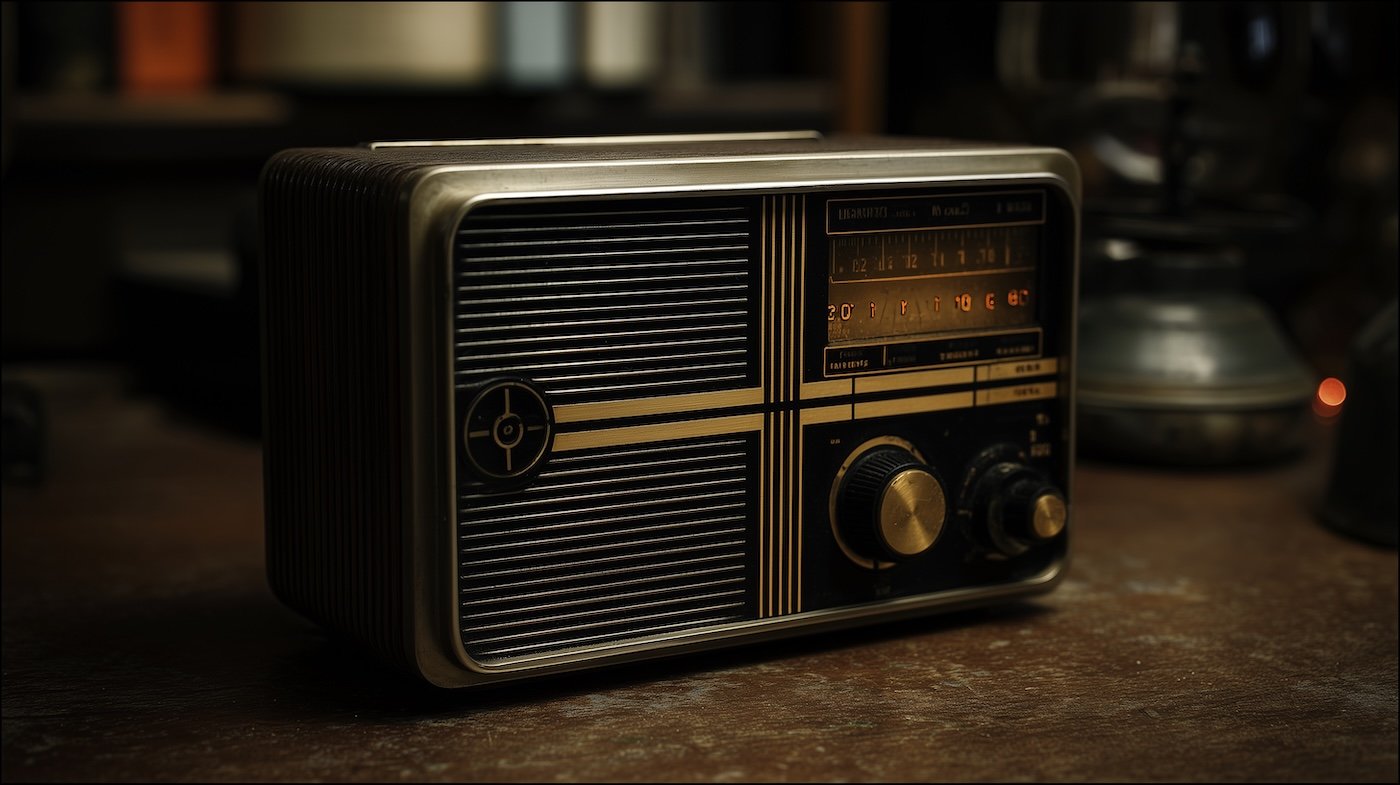
The commercial radio wasteland of late-70s New Jersey stretched endlessly as the Turnpike—Journey and Styx pumping from car stereos like musical novocaine, dulling the senses one power chord at a time. But somewhere on the left side of your dial, buried in static and broadcasting from college basement studios, voices were transmitting something else entirely. Something dangerous.
WSOU 89.5 FM and WFMU 91.1 FM weren’t just radio stations; they were contraband frequencies—sonic speakeasies where DJs slipped you sounds that corporate America had quarantined. While Casey Kasem counted down sanitized hits, these stations were playing Sex Pistols, Killing Joke, and Siouxsie and the Banshees like dispatches from a parallel universe where music still had teeth and fingernails.
For a kid who’d shuffled through five different schools before high school—a perpetual outsider with posters of Bobby Sherman and David Cassidy slowly giving way to Ian Curtis and Joe Strummer—these stations became lifelines. The Beatles and Led Zeppelin records still scattered across my bedroom floor suddenly felt like artifacts from someone else’s religion. Hugh Downs had accidentally blown my circuits one night in ’77, delivering a “20/20” segment on punk rock that sent me hunting through radio static for more of whatever the Sex Pistols were saying.
Alison Steele—the velvet-voiced “Nightbird” of WNEW—would occasionally drop these strange new sounds between her progressive rock sets, but it was WSOU that delivered the uncut stuff. Their playlists read like manifestos: The Clash, Stiff Little Fingers, The Undertones, Joy Division, Echo & the Bunnymen, The Chameleons, Hanoi Rocks, The Church. None of these names registered on commercial radio’s radar. They existed in a parallel dimension where melody didn’t have to be comfortable and lyrics didn’t have to play nice.
I’d hunt through imported zines for Rodney Bingenheimer’s legendary “Rodney on the ROQ” playlists, tracking bands like constellations, waiting for them to appear in WSOU’s rotation. When they finally did, the validation was electric—proof I wasn’t alone in hearing something vital in these strange transmissions.
By ’78, my cousin Nancy was pulling me deeper into the underground, her gift of Duran Duran’s first album for my 18th birthday a passport to somewhere else entirely. The radio stations had been maps; the clubs were territories. Nancy guided me through doorways that might as well have been wormholes—Hurrah’s, Peppermint Lounge, Danceteria, Maxwell’s—each threshold crossing me from Jersey nobody to participant in something that felt like history.
Inside Maxwell’s, on that small stage in the back, The Bongos and Human Switchboard turned alienation into electricity. At Hurrah’s, Yellow Magic Orchestra and James Chance and the Contortions bent sound into shapes that made your organs shift position. The Bush Tetras’ hypnotic post-punk incantations. The industrial assaults of Foetus that left you feeling scoured and new. None of this would ever make American Top 40, but for the scattered tribe who found these frequencies—both radio and physical—it was salvation.
We were bridge-and-tunnel kids, carrying the stench of suburbia that the Manhattan club elite could smell from across the dance floor. Their perfect goth eyeliner and mohawks, thrift-store jackets and practiced disaffection made clear the hierarchies, even in these supposed utopias. However, the music democratized everything, even if only for the duration of a set. The college radio DJs— kids with shaking hands and encyclopedic knowledge—had prepared us for this communion, this gathering of scattered believers.
These stations did more than play records—they created context, community, and continuity for those of us perpetually starting over. In the wasteland between disco’s death and MTV’s birth, they kept alive sounds too raw, too strange, or too truthful for commercial airplay. They were cultural lifelines for misfits, incubators for bands that would reshape music, and proof that somewhere beyond the mall parking lots, people were making art that refused compromise.
Those radio waves traveled through bedroom walls like whispers of conspiracy—college kids with turntables and microphones telling us that we weren’t crazy, that the world was, and here was the soundtrack for navigating its beautiful ruins.
These passionate broadcasters weren’t just playing records; they were casting spells that opened doorways to a new world. Doorways that led to 2 AM odysseys across bridges and through tunnels, heart still pounding with bass lines, fingers sticky with spilled drinks, trying to make it home before dawn erased whatever magic had happened under those club lights. Doorways that eventually led westward, to Los Angeles, chasing something I couldn’t name. Doorways that led, improbably, to me working at the Rainbow Bar & Grill in LA, finally inside the machinery that had once seemed so impenetrable.
But those are stories for another frequency. Another transmission from these Zen Rebel Diaries, where the past isn’t just nostalgia—it’s evidence that we were alive once, electric and unafraid, hunting for sounds that might save us in the static between stations.