Category: Blog

Your blog category

  • Building My Digital Fortress: A Confession

    Building My Digital Fortress: A Confession

    Or: How I Learned to Stop Worrying and Love My NAS

    So here’s the thing about freedom – real freedom, the kind Kerouac and Cassady chased across highways and Hesse’s Steppenwolf prowled through in his fevered mind – it doesn’t come from the cloud. Not from Google’s gleaming data centers or Microsoft’s azure dreams or whatever Silicon Valley snake oil they’re peddling this week. Freedom comes from sovereignty, from knowing exactly where your data sleeps at night, from being the gatekeeper of your own digital soul.

    Twenty-five years in IT and I’ve watched the slow creep of what I call the Death Star philosophy – everything pulling toward centralization, toward Big Tech’s gravitational pull, toward convenient surrender. Click here, upload there, trust us with everything. Sure, it’s easy. Prison’s easy too.

    That’s why I built CyberZen.

    The Stack (Or: What Runs in My Basement While I Sleep)

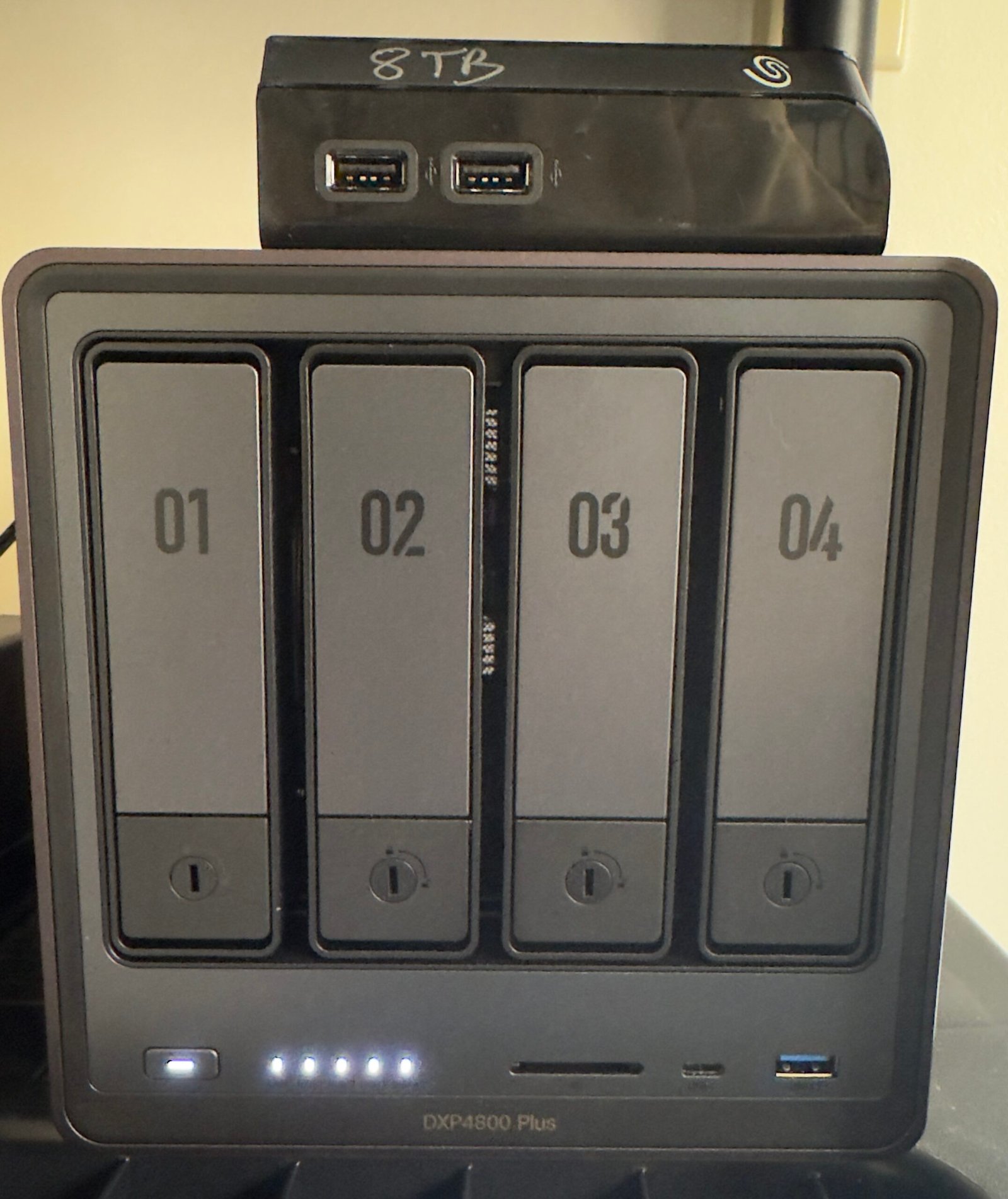
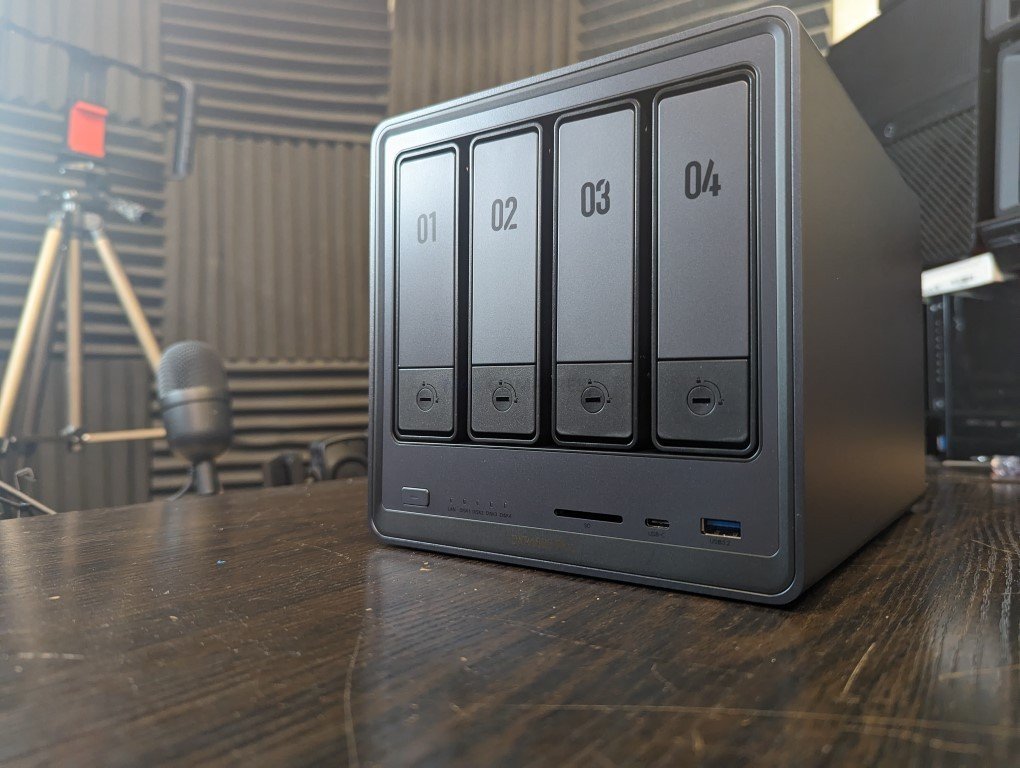
    Started with a UGREEN NAS 4800 Plus – nothing fancy, just solid hardware that doesn’t phone home to Cupertino or Redmond every five minutes. Threw Docker on it, Portainer to keep the containers honest, and then the real work began.

    Immich handles my photos now. Every shot from my iPhone backs up to hardware I own, not to Apple’s iCloud purgatory where algorithms decide what’s worth keeping. My images, my pixels, my memories – mine.

    Jellyfin streams my media collection. Built it over decades – music that meant something, films that changed how I saw the world. Not whatever Netflix’s AI thinks I should consume this week based on engagement metrics and focus group testing. My culture, curated by the only algorithm that matters: taste.

    Pi-hole stands guard at the network’s edge, blocking the surveillance capitalism that follows us around the web like a private detective we never hired. Every ad blocked is a small victory against the attention economy, against the commodification of eyeballs and souls.

    Then there’s Syncthing – a beautiful piece of software, really – keeping my Obsidian vaults synchronized across devices without touching anyone’s cloud. My notes flow from MacBook to iPhone to iPad to Surface, all through my own mesh network, my own pipes, my own rules.

    Open WebUI connects me to local AI models. Because if you think I’m sending my thoughts and questions to ChatGPT’s servers, where every prompt becomes training data, you haven’t been paying attention. LM Studio runs six different language models on my Alienware workstation – that Ryzen 9 5900HX is earning its keep – with ChromaDB holding 14,991 chunks of indexed knowledge. Built a whole FastAPI RAG service so I can query my own digital memory without asking permission from distant corporations.

    ComfyUI for image generation. Joplin for notes. Audiobookshelf, because sometimes you need Kerouac read aloud on a long drive. RustDesk for remote access. Taildrop for secure file sharing.

    All of it running on Tailscale’s mesh network – encrypted tunnels between my devices, no exposed ports to the wild internet, no attack surface for script kiddies or three-letter agencies to probe.

    Watching the Watchers (Or: The Mirror of the Machine)

    Then came the moment every systems administrator faces – that creeping realization you’re flying blind. Services running, containers spinning, data flowing through pipes you can’t see. Sure, everything works until it doesn’t. Until the RAM maxes out at 3 am and you’re troubleshooting in the dark, cursing yourself for not knowing what normal looked like before it all went sideways.

    So I built the panopticon. Not to control – to see. To know.

    Deployed the whole monitoring cathedral: Netdata as the real-time pulse, Prometheus scraping metrics like a faithful archivist, Grafana painting dashboards that turn raw numbers into meaning. Added Loki for log aggregation because sometimes the story’s in the errors nobody thought to read. cAdvisor watching the containers, Node Exporter reporting from the metal itself, and Promtail shipping it all to where it needs to go.

    Know what happened? Immediate revelation. SWAP usage screaming, memory pressure building, storage creeping toward 84% like slow-motion suffocation. Problems I’d been living with, normalized into background noise, suddenly visible in glowing orange warnings on midnight-blue dashboards.

    Visibility is a strange drug. Once you see the system’s heartbeat in real-time, once you watch the breathing of your infrastructure mapped out in graphs and gauges, you can’t unsee it. Every spike tells a story. Every dip asks a question. The machine becomes legible, interpretable, knowable in ways it never was when you were just guessing at symptoms.

    There’s something almost Jungian about it – confronting the shadow, making the unconscious conscious. Your infrastructure has depths you don’t see until you shine a light down there. And sometimes what you find ain’t pretty. But at least you know. At least you can act instead of react, plan instead of panic.

    Upgraded from 8GB to 16GB RAM once the monitoring showed me the truth. Cleaned out redundant backups when the storage metrics made it clear I was drowning in digital hoarding, saving three copies of things that didn’t need saving once. Down to 79% now, breathing room returning, the whole system running smoother because I could finally see what needed fixing.

    The oracle sees all – and sometimes she tells you things you don’t want to hear. But I’d rather know than wonder. Rather see the truth in dashboards at 2 am than wake up to a dead NAS and no clue what killed it.

    The Philosophy (Or: Why Any of This Matters)

    There’s this moment in Camus where Sisyphus reaches the top of the hill, and in that pause before the boulder rolls back down, he’s free. Completely, utterly free. That’s what digital sovereignty feels like – the moment you realize you don’t need their services, their platforms, their convenient chains.

    Every container I spin up is an act of rebellion. Not the performative kind you see on social media – the real kind, the quiet kind, the kind that requires actually doing the work instead of just talking about it. Measure twice, cut once. Test thoroughly. Document everything. Build it right because nobody’s coming to save you when it breaks.

    My Greek Orthodox faith taught me about stewardship, about being a faithful guardian of what’s entrusted to you. Your data, your digital life, your creative work – these aren’t commodities to be strip-mined by corporations. They’re sacred, in their way. Worth protecting. Worth the effort.

    Jung wrote about individuation – becoming who you really are instead of what society expects. Building CyberZen is my version of that process. Separating myself from the collective unconscious of cloud dependency, of tech feudalism, of digital serfdom masquerading as convenience.

    The Road Goes On

    This isn’t the end of the journey. Planning to migrate the Alienware from Windows 11 to Linux Mint – another small declaration of independence. Expanding storage, optimizing performance, and maybe spinning up Ghost CMS for proper self-hosted publishing instead of relying on WordPress’s ecosystem.

    But here’s what I know for certain: every service I control is one less point of failure, one less corporation with keys to my kingdom, one less backdoor for surveillance capitalism to creep through.

    Steppenwolf wandered between worlds, never quite at home in either. Maybe that’s us now – those of us building our own infrastructure in basements and spare bedrooms, running servers while the rest of the world surrenders to the cloud. Not quite fitting into the mainstream narrative of progress, but not willing to go gentle into that good night of digital dependency either.

    So yeah. I built a NAS. I run my own services. I maintain my own backyard, digital and otherwise.

    And I sleep better knowing exactly where my data lives.


    The CyberZen stack: Immich • Jellyfin • Pi-hole • Portainer • Syncthing • Open WebUI • RustDesk • ComfyUI • Joplin • Audiobookshelf • Taildrop • LM Studio • ChromaDB • Ollama • Netdata • Prometheus • Grafana • Loki • cAdvisor • Node Exporter • Promtail

    Connected via Tailscale mesh networking. Zero cloud dependencies. 100% digital sovereignty.

    – ZenRebel
    UGreen-DXP4800-PLUS
  • A Musical Hell by Alejandra Pizarnik — Confronting the Shadow in Poetry

    A Musical Hell by Alejandra Pizarnik — Confronting the Shadow in Poetry

    There are writers who offer comfort, and then there are writers who offer truth. Alejandra Pizarnik belongs firmly in the second category.

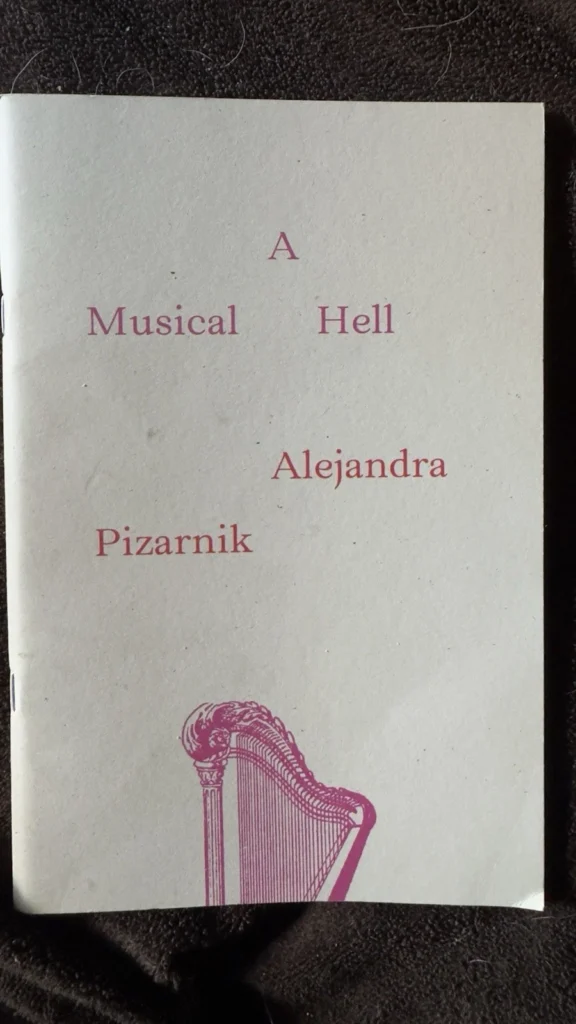
    I’m parting with my copy of A Musical Hell — not because it doesn’t matter to me, but because I’m downsizing a collection built over decades. And as I prepare to let it go, I find myself thinking about why books like this shaped the way I see the world.

    Pizarnik isn’t an easy read. She’s not supposed to be. But if you’ve ever felt like an outsider in your own life, if you’ve wrestled with the shadow side of existence, if you believe art should disturb as much as it illuminates — then she’s your poet.

    WHO WAS ALEJANDRA PIZARNIK?

    Born in Buenos Aires in 1936 to Russian-Jewish immigrant parents, Alejandra Pizarnik spent her short life grappling with identity, madness, sexuality, and silence. She died by suicide in 1972 at the age of 36, but not before creating some of the most uncompromising poetry of the 20th century.

    Her work is fragmentary, surrealist, and obsessed with the breaking down of language. She wrote in the tradition of poets like Paul Celan and Antonin Artaud — artists who believed poetry could only be born from confrontation with the void.

    Reading Pizarnik feels like standing at the edge of an abyss. She doesn’t look away. She doesn’t soften. She writes:

    “I am afraid of writing. Writing is falling endlessly.”

    That’s not a metaphor. That’s lived experience rendered as art.

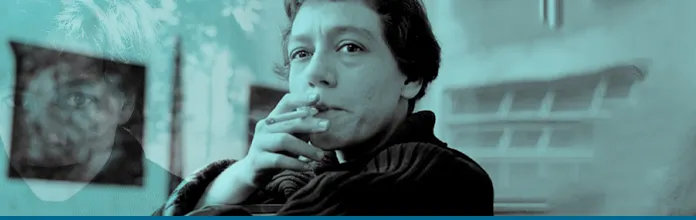
    Pizarnik smoking

    WHY A MUSICAL HELL MATTERS

    A Musical Hell (Extracción de la piedra de locura in the original Spanish) was written near the end of Pizarnik’s life. It’s experimental, theatrical, fragmented — a descent into madness rendered as a strange kind of music.

    The Yvette Siegert translation (New Directions, 2013) captures the rawness and intensity of Pizarnik’s language. Siegert doesn’t smooth out the sharp edges. She lets the work breathe in its darkness.

    This isn’t a book you “enjoy” in any conventional sense. It’s a book you survive. It works on you the way Kafka’s The Trial or Hesse’s Steppenwolf does — not by resolving anything, but by forcing you to confront what you’ve been avoiding.

    THE OUTSIDER TRADITION

    When I was a teenager, I found Colin Wilson’s The Outsider — that brilliant study of alienation and creative genius. Wilson wrote about Dostoevsky, Nietzsche, Camus, Sartre, Hesse — those writers who couldn’t reconcile themselves to a world that felt fundamentally absurd.

    Pizarnik belongs in that lineage.

    She’s asking the same questions Camus asked in The Myth of Sisyphus. She’s exploring the same split self Hesse examined in Steppenwolf. From a Jungian perspective, she’s diving headfirst into the shadow — the parts of ourselves we’re terrified to acknowledge.

    And she’s doing it without a safety net.

    That’s what draws me to writers like this. They don’t offer easy answers. They don’t promise redemption. They sit with you in the darkness and say, “This is real. This matters. Don’t look away.”

    WHY I’M LETTING IT GO (AND WHERE YOU CAN FIND IT) (Feb 2026 update – SOLD)

    As I downsize my personal library, I’m making peace with the fact that some books served their purpose at a specific time in my life. A Musical Hell was one of those books. It found me when I needed it, and now it’s time for someone else to discover it.

    My copy is pristine — read once, carefully stored in a smoke-free home. If you’re looking for it, I’ve listed it on eBay here. — now sold. It’s the New Directions edition with Yvette Siegert’s translation, in collector-quality condition.

    But honestly, whether you buy my copy or find your own, read Pizarnik. Seek out her work. Sit with the discomfort. Let her haunt you.

    FINAL THOUGHTS

    There’s a line from Pizarnik that stays with me:

    “I want to talk to you. But I am afraid of my voice.”

    That fear — of speaking, of being heard, of revealing the truth beneath the surface — that’s what makes her work so powerful. She wrote anyway. She spoke into the void anyway.

    And decades after her death, her voice still echoes.

    If you’ve ever felt that same fear, that same sense of standing outside the world looking in, Pizarnik will recognize you. She’ll meet you in that darkness.

    And sometimes, that recognition is enough.

    Pizarnik A Musical Hell

  • The Accidental Technologist: How a Rock n’ Roll Gypsy Found Home in IT

    The Accidental Technologist: How a Rock n’ Roll Gypsy Found Home in IT

    I never saw myself ending up in a server room.

    There I was in the late ’80s, couch surfing at some friend’s uncle’s loft, my hair still carrying the stale cigarette smoke from last night’s club, guitar case propped against my backpack that contained whatever valuables and clothing I had. The punch cards and COBOL classes from college felt like they belonged to someone else’s life story — some alternate-universe version of me who’d taken the sensible path.

    Life had other plans.

    I still remember the exact moment everything shifted. October 1997, I’m now living in San Francisco. I’m wandering through Circuit City on Market and Van Ness, dodging families test-driving camcorders and teenagers with JNCOs hanging off their hips, crowding around PlayStation demo kiosks. The air carried that distinct electronics-store blend — new plastic, carpet cleaner, and the static electricity of a dozen TVs playing the same CNN clip on loop. Blur’s “Song 2” was blasting from a wall of stereo displays, the woo-hoos bouncing between demonstration speakers while salesmen in those painfully red polo shirts adjusted equalizer settings on receivers that cost more than my monthly rent.

    Just that morning, I’d been listening to Brian Jonestown Massacre at a friend’s place in the Mission, passing a joint around his kitchen table while “Straight Up and Down” played from speakers he’d salvaged from an abandoned college radio station. Those fuzzy, droning guitar lines were still stuck in my head as I drifted past rows of car audio equipment that promised to make your Honda Civic sound like the Fillmore.

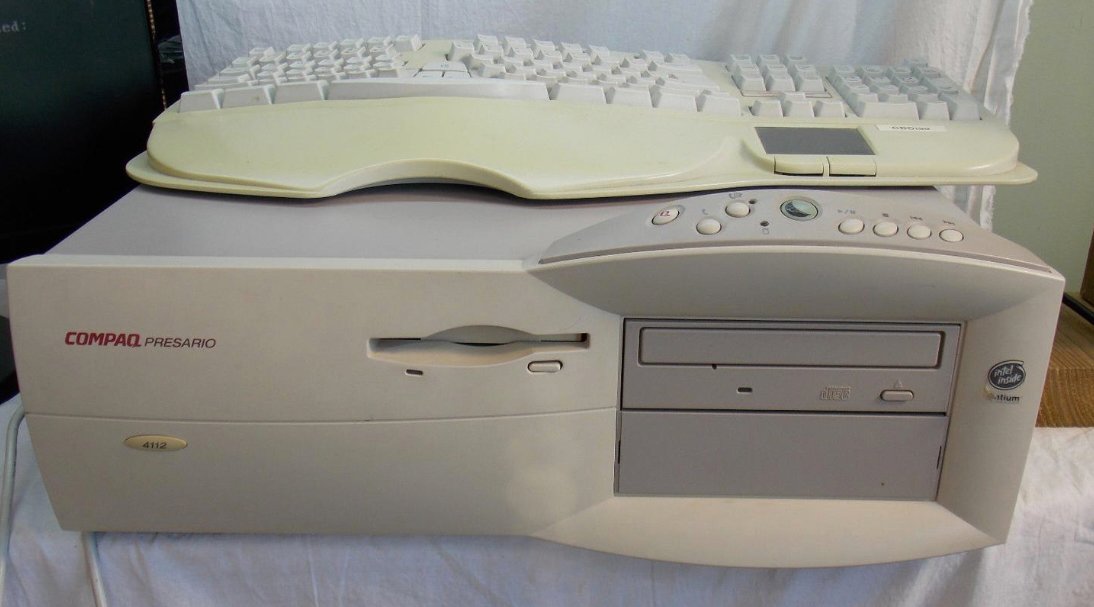
    Right there at the front of the store, nestled between the audio section and a display of cordless phones that all looked like props from “Saved by the Bell,” sat a Compaq Presario 4112. Its beige case looked like all the sci-fi movies I watched as a kid. It was the gateway to HAL and “2001: A Space Odyssey,” as well as the haunting 1970 film, “Colossus: The Forbin Project” – that movie that gave me nightmares about computers taking over the world when I snuck downstairs to watch it at 1 AM on Channel 2’s late-night movie.

    $1,899. Nearly two months’ rent at that time. It was the computer and monitor package, and it was calling out to me.

    “This is an amazing opportunity,” I told myself, already reaching for my credit card. We were starting to use computers more and more at work, and I wanted one of my own so I could tear it apart and learn how they worked. The sales guy kept rattling off specs — 120MHz Pentium processor with MMX technology! 16MB RAM (including 8MB integrated on the system board), expandable up to 72 MB. 1.6GB hard drive! — like he was speaking some religious incantation. I nodded as if I understood what made these numbers impressive, the same way I’d nod when some guitar tech would talk about pickup configurations or tube amplifier specs.

    Compaq 4112 - Sept 1997
    Compaq 4112 – Sept 1997

    That night, sitting at my office table with the blue monitor glow illuminating my cat as she slept on the couch, something clicked as Windows 95 finished installing. Not the computer — me. There was something eerily familiar about seeing that system come alive. The same part of my brain that once memorized Hendrix solos and worshipped at the altar of Cream was now crafting .bat files and tweaking config.sys parameters. It was like discovering that the language of code had the same satisfying click as finding the perfect chord progression. The rhythm of commands, the syntax patterns – they were verses and choruses in their own strange way.

    I found myself diving below the Windows interface into MS-DOS, oddly drawn to the stark black screen with its blinking command prompt. I’d stay up until 3 AM, the blue glow of the monitor replacing stage lights, fingers dancing across the keyboard instead of fretboard, feeling the same rush I used to get working out a complicated bass line. When I finally got that first self-written batch file to automate my system backup, I felt the same triumph as when I’d finally mastered that impossible bass riff from Iron Maiden’s “Run To The Hills” after weeks of trying.

    I didn’t know it then, but I’d just bought my ticket for a 25-year ride.

    The most surreal moment came about three weeks after I brought that Presario home. I’d installed the bundled software — Quicken, Microsoft Works, and that America Online CD that promised 100 FREE HOURS, the same AOL CD that was being handed out everywhere, filling mail boxes and falling out of magazines like confetti at a digital parade.

    That AOL CD felt like a backstage pass to some exclusive digital club. I’d sit mesmerized watching the “You’ve Got Mail” animation, each connection a small victory against technology that seemed determined to test your patience. Remember when downloading a single MP3 was an overnight commitment? When you’d carefully queue up downloads on Napster before bed, praying nobody would pick up the phone and kill your connection? I’d wake up to find whether I’d successfully captured that rare Velvet Underground bootleg or if I’d have to start all over again. We measured our digital lives in kilobytes back then, each megabyte precious as gold.

    The machine came with this 33.6 kbps ISA modem — a beige rectangle of possibility that connected through my phone line. 

    I remember calling my dad that first time. The strange, almost ceremonial process of it all: ensuring no one would need the phone, double-checking the connection, and launching the call software. That otherworldly dial-up screech that sounded like robots arguing — the one you could mute but somehow felt wrong to silence, like it was part of the spell that made the magic work. The same hands that had worn calluses from bass strings were now connecting worlds through plastic and silicon.

    “Dad, can you hear me? I’m talking through my COMPUTER,” I practically shouted, as if volume would help the connection. His voice came back through those tiny JBL speakers, slightly tinny and compressed, as if he were talking through a drive-thru intercom from the future.

    We both laughed at the ‘magic’, and mused about how amazing technology was — that I was sitting in San Francisco with my coffee in the “No More Bullshit” mug I’d bought at City Lights after a Kerouac binge, he was in his kitchen in New Jersey, and somehow this beige box connected us through the same phone lines we’d always used, but in this entirely new way.

    The journey from that night to becoming “Lead Program Manager for IT Infrastructure” wasn’t a straight line. It was a series of small moments that somehow added up to a career:

    The first time I fixed a network printer at a temporary job, people looked at me like I’d performed actual magic. It reminded me of the time I rewired my own guitar pickup in the bathroom of a club ten minutes before we went on.

    The night I stayed up until 4 AM, teaching myself HTML with a 2-liter bottle of Dr. Pepper and a pack of cigarettes, I created a tragic GeoCities page with animated flaming skull GIFs and an auto-playing MIDI of “Stairway to Heaven.” 

    The job interview where I bluffed my way through questions about Novell NetWare, my Doc Martens hidden under the table with a cheat sheet taped to the inside of one boot, then spent the weekend at Barnes & Noble with a stack of Novell study guides, cramming as if it were finals week. The same Barnes & Noble where I’d once spent hours in the music section, memorizing guitar tablature from books I couldn’t afford to buy.

    The first server crash I experienced — that sphincter-pucker moment, that feeling of stomach-churning dread watching years of company data potentially evaporating while executives hovered behind me, clearing their throats with tense anxiety. 

    Those server rooms became my second home. Always deliciously cold, always humming with that particular electronic white noise that became as familiar as my own heartbeat. I’d bring in Indian food on weekend maintenance windows, set up shop between server racks with containers of Saag Paneer going cold while I rebooted servers, and lose hours reconfiguring systems while Art Bell was talking about UFOs and Archons on my little radio. 

    The strange truth about accidentally finding your place is how natural it eventually feels. The progression from “that weird woman who can fix the printer” to the person whose phone rings when the entire system goes down doesn’t happen overnight. It occurs in the accumulation of small victories, late nights, and problems solved when nobody else could figure them out. Not so different from working your way up from crappy opening slots to headlining shows.

    I still have a few pieces of ancient technology preserved like personal artifacts. My Iomega Zip drive sits on my shelf next to my first-pressing vinyl of “Marquee Moon” by Television. I can’t bring myself to throw away that box of driver CDs or those ZIP disks, just like I can’t part with the setlists scribbled on bar napkins or that half-working four-track recorder. The Dell Inspiron that survived having wine spilled on it during a particularly wild house party. They’re mileposts marking a journey I never planned to take.

    It’s funny how our generation straddled these worlds. We grew up with vinyl records, rotary phones, and a TV with just three channels. Then suddenly, we’re the ones explaining email to our parents and teaching our bosses how not to print out every single document. We weren’t digital natives, but we were digital immigrants who arrived early enough to help build the new world. Maybe that’s why I found such comfort in the logic of technology – it offered structure in a time when everything else was changing so fast. While friends were lamenting the death of rock and roll or the corporatization of the radio, I was discovering new frontiers where creativity still felt limitless.

    Sometimes I wonder about that alternate version of me — the one who kept to the original script, who never wandered into Circuit City that day. The one who might still be chasing gigs, living out of a van, guitar case in hand. I don’t know if she’d be happier, but I know she’d have missed something important.

    Who would have thought that a reluctant tech student would find her place among the server racks and emergency pagers? Life takes turns you don’t see coming, and sometimes the best ones happen when you’re not even looking at the road.

    This is the first in a series of reflections on an accidental 25-year career in technology. Next up: “The First Time I Broke Production: A Horror Story with a Happy Ending.”

  • Frequency Freedom: WSOU, WFMU, and the Underground Soundtracks of a Jersey Misfit

    Frequency Freedom: WSOU, WFMU, and the Underground Soundtracks of a Jersey Misfit

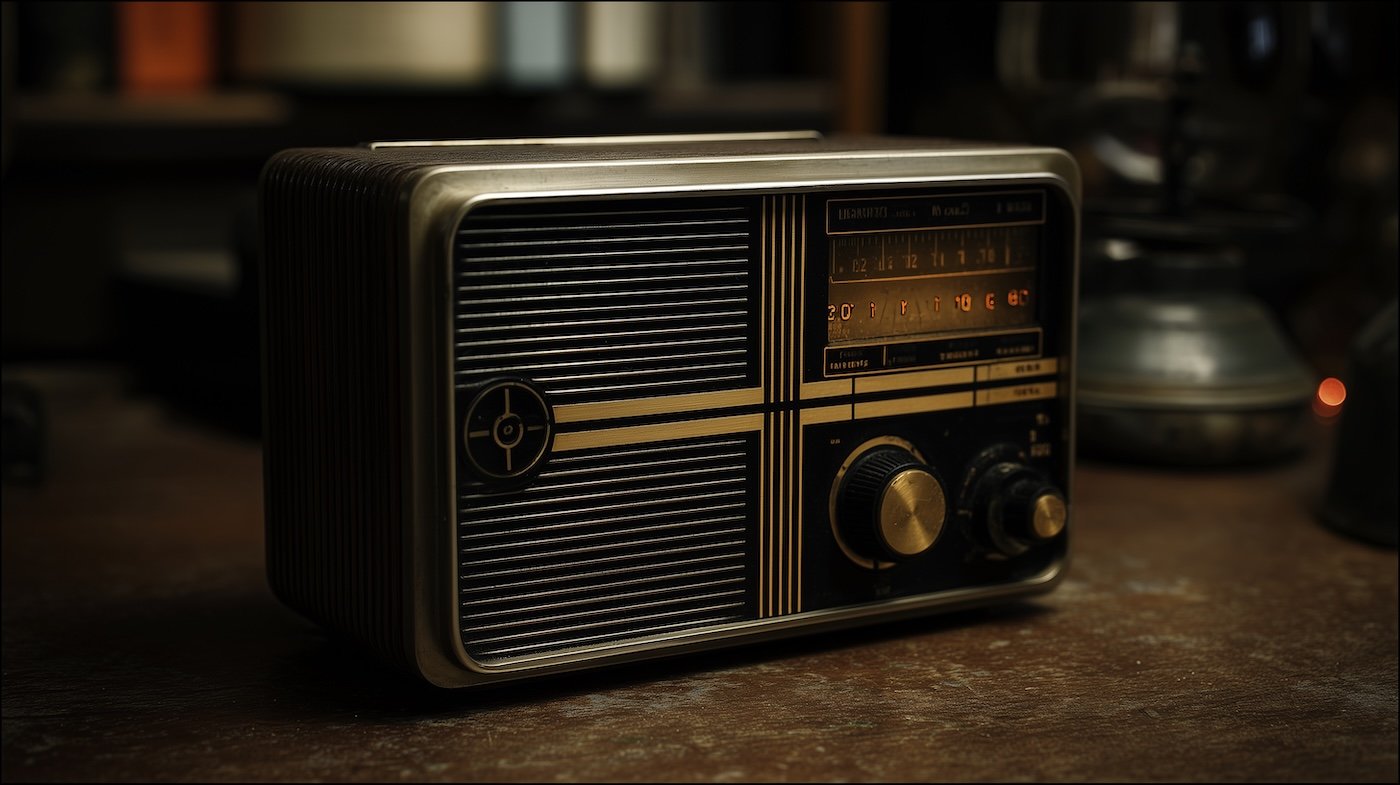
    The commercial radio wasteland of late-70s New Jersey stretched endlessly as the Turnpike—Journey and Styx pumping from car stereos like musical novocaine, dulling the senses one power chord at a time. But somewhere on the left side of your dial, buried in static and broadcasting from college basement studios, voices were transmitting something else entirely. Something dangerous.

    WSOU 89.5 FM and WFMU 91.1 FM weren’t just radio stations; they were contraband frequencies—sonic speakeasies where DJs slipped you sounds that corporate America had quarantined. While Casey Kasem counted down sanitized hits, these stations were playing Sex Pistols, Killing Joke, and Siouxsie and the Banshees like dispatches from a parallel universe where music still had teeth and fingernails.

    For a kid who’d shuffled through five different schools before high school—a perpetual outsider with posters of Bobby Sherman and David Cassidy slowly giving way to Ian Curtis and Joe Strummer—these stations became lifelines. The Beatles and Led Zeppelin records still scattered across my bedroom floor suddenly felt like artifacts from someone else’s religion. Hugh Downs had accidentally blown my circuits one night in ’77, delivering a “20/20” segment on punk rock that sent me hunting through radio static for more of whatever the Sex Pistols were saying.

    Alison Steele—the velvet-voiced “Nightbird” of WNEW—would occasionally drop these strange new sounds between her progressive rock sets, but it was WSOU that delivered the uncut stuff. Their playlists read like manifestos: The Clash, Stiff Little Fingers, The Undertones, Joy Division, Echo & the Bunnymen, The Chameleons, Hanoi Rocks, The Church. None of these names registered on commercial radio’s radar. They existed in a parallel dimension where melody didn’t have to be comfortable and lyrics didn’t have to play nice.

    I’d hunt through imported zines for Rodney Bingenheimer’s legendary “Rodney on the ROQ” playlists, tracking bands like constellations, waiting for them to appear in WSOU’s rotation. When they finally did, the validation was electric—proof I wasn’t alone in hearing something vital in these strange transmissions.

    By ’78, my cousin Nancy was pulling me deeper into the underground, her gift of Duran Duran’s first album for my 18th birthday a passport to somewhere else entirely. The radio stations had been maps; the clubs were territories. Nancy guided me through doorways that might as well have been wormholes—Hurrah’s, Peppermint Lounge, Danceteria, Maxwell’s—each threshold crossing me from Jersey nobody to participant in something that felt like history.

    Inside Maxwell’s, on that small stage in the back, The Bongos and Human Switchboard turned alienation into electricity. At Hurrah’s, Yellow Magic Orchestra and James Chance and the Contortions bent sound into shapes that made your organs shift position. The Bush Tetras’ hypnotic post-punk incantations. The industrial assaults of Foetus that left you feeling scoured and new. None of this would ever make American Top 40, but for the scattered tribe who found these frequencies—both radio and physical—it was salvation.

    We were bridge-and-tunnel kids, carrying the stench of suburbia that the Manhattan club elite could smell from across the dance floor. Their perfect goth eyeliner and mohawks, thrift-store jackets and practiced disaffection made clear the hierarchies, even in these supposed utopias. However, the music democratized everything, even if only for the duration of a set. The college radio DJs— kids with shaking hands and encyclopedic knowledge—had prepared us for this communion, this gathering of scattered believers.

    These stations did more than play records—they created context, community, and continuity for those of us perpetually starting over. In the wasteland between disco’s death and MTV’s birth, they kept alive sounds too raw, too strange, or too truthful for commercial airplay. They were cultural lifelines for misfits, incubators for bands that would reshape music, and proof that somewhere beyond the mall parking lots, people were making art that refused compromise.

    Those radio waves traveled through bedroom walls like whispers of conspiracy—college kids with turntables and microphones telling us that we weren’t crazy, that the world was, and here was the soundtrack for navigating its beautiful ruins.

    These passionate broadcasters weren’t just playing records; they were casting spells that opened doorways to a new world. Doorways that led to 2 AM odysseys across bridges and through tunnels, heart still pounding with bass lines, fingers sticky with spilled drinks, trying to make it home before dawn erased whatever magic had happened under those club lights. Doorways that eventually led westward, to Los Angeles, chasing something I couldn’t name. Doorways that led, improbably, to me working at the Rainbow Bar & Grill in LA, finally inside the machinery that had once seemed so impenetrable.

    But those are stories for another frequency. Another transmission from these Zen Rebel Diaries, where the past isn’t just nostalgia—it’s evidence that we were alive once, electric and unafraid, hunting for sounds that might save us in the static between stations.

  • Test Post 12

    Here’s three paragraphs of Lorem Ipsum text, tailored to your focus on 20th-century culture (1930s–2000, especially 1960s–2000) to give it a nostalgic vibe while keeping the classic placeholder structure:

    Lorem ipsum dolor sit amet, consectetur adipiscing elit, sed do eiusmod tempor incididunt ut labore et dolore magna aliqua. Ut enim ad minim veniam, quis nostrud exercitation ullamco laboris nisi ut aliquip ex ea commodo consequat. Duis aute irure dolor in reprehenderit in voluptate velit esse cillum dolore eu fugiat nulla pariatur. Excepteur sint occaecat cupidatat non proident, sunt in culpa qui officia deserunt mollit anim id est laborum. Think back to the crackle of a vinyl record spinning on a turntable, the warm glow of a cathode-ray TV playing The Brady Bunch, or the smell of a dog-eared paperback from a used bookstore in the ’70s—those simple joys before the internet rewired everything.

    Sed ut perspiciatis unde omnis iste natus error sit voluptatem accusantium doloremque laudantium, totam rem aperiam, eaque ipsa quae ab illo inventore veritatis et quasi architecto beatae vitae dicta sunt explicabo. Nemo enim ipsam voluptatem quia voluptas sit aspernatur aut odit aut fugit, sed quia consequuntur magni dolores eos qui ratione voluptatem sequi nesciunt. Neque porro quisquam est, qui dolorem ipsum quia dolor sit amet, consectetur, adipisci velit. Picture a summer night in the ’80s, cruising with the windows down, Springsteen’s Born to Run blasting from a cassette deck, or catching Back to the Future at a neon-lit theater—moments that defined a generation’s heart.

    At vero eos et accusamus et iusto odio dignissimos ducimus qui blanditiis praesentium voluptatum deleniti atque corrupti quos dolores et quas molestias excepturi sint occaecati cupiditate non provident, similique sunt in culpa qui officia deserunt mollitia animi. Quis autem vel eum iure reprehenderit qui in ea voluptate velit esse quam nihil molestiae consequatur, vel illum qui dolorem eum fugiat quo voluptas nulla pariatur. Imagine flipping through a stack of Polaroids from a ’90s road trip, mixtapes labeled in sharpie, or the thrill of sneaking into a midnight showing of Pulp Fiction—a time when life felt raw, unfiltered, and gloriously analog.

  • Test Post 11

    Here’s three paragraphs of Lorem Ipsum text, tailored to your focus on 20th-century culture (1930s–2000, especially 1960s–2000) to give it a nostalgic vibe while keeping the classic placeholder structure:

    Lorem ipsum dolor sit amet, consectetur adipiscing elit, sed do eiusmod tempor incididunt ut labore et dolore magna aliqua. Ut enim ad minim veniam, quis nostrud exercitation ullamco laboris nisi ut aliquip ex ea commodo consequat. Duis aute irure dolor in reprehenderit in voluptate velit esse cillum dolore eu fugiat nulla pariatur. Excepteur sint occaecat cupidatat non proident, sunt in culpa qui officia deserunt mollit anim id est laborum. Think back to the crackle of a vinyl record spinning on a turntable, the warm glow of a cathode-ray TV playing The Brady Bunch, or the smell of a dog-eared paperback from a used bookstore in the ’70s—those simple joys before the internet rewired everything.

    Sed ut perspiciatis unde omnis iste natus error sit voluptatem accusantium doloremque laudantium, totam rem aperiam, eaque ipsa quae ab illo inventore veritatis et quasi architecto beatae vitae dicta sunt explicabo. Nemo enim ipsam voluptatem quia voluptas sit aspernatur aut odit aut fugit, sed quia consequuntur magni dolores eos qui ratione voluptatem sequi nesciunt. Neque porro quisquam est, qui dolorem ipsum quia dolor sit amet, consectetur, adipisci velit. Picture a summer night in the ’80s, cruising with the windows down, Springsteen’s Born to Run blasting from a cassette deck, or catching Back to the Future at a neon-lit theater—moments that defined a generation’s heart.

    At vero eos et accusamus et iusto odio dignissimos ducimus qui blanditiis praesentium voluptatum deleniti atque corrupti quos dolores et quas molestias excepturi sint occaecati cupiditate non provident, similique sunt in culpa qui officia deserunt mollitia animi. Quis autem vel eum iure reprehenderit qui in ea voluptate velit esse quam nihil molestiae consequatur, vel illum qui dolorem eum fugiat quo voluptas nulla pariatur. Imagine flipping through a stack of Polaroids from a ’90s road trip, mixtapes labeled in sharpie, or the thrill of sneaking into a midnight showing of Pulp Fiction—a time when life felt raw, unfiltered, and gloriously analog.

  • Test Post 10

    Here’s three paragraphs of Lorem Ipsum text, tailored to your focus on 20th-century culture (1930s–2000, especially 1960s–2000) to give it a nostalgic vibe while keeping the classic placeholder structure:

    Lorem ipsum dolor sit amet, consectetur adipiscing elit, sed do eiusmod tempor incididunt ut labore et dolore magna aliqua. Ut enim ad minim veniam, quis nostrud exercitation ullamco laboris nisi ut aliquip ex ea commodo consequat. Duis aute irure dolor in reprehenderit in voluptate velit esse cillum dolore eu fugiat nulla pariatur. Excepteur sint occaecat cupidatat non proident, sunt in culpa qui officia deserunt mollit anim id est laborum. Think back to the crackle of a vinyl record spinning on a turntable, the warm glow of a cathode-ray TV playing The Brady Bunch, or the smell of a dog-eared paperback from a used bookstore in the ’70s—those simple joys before the internet rewired everything.

    Sed ut perspiciatis unde omnis iste natus error sit voluptatem accusantium doloremque laudantium, totam rem aperiam, eaque ipsa quae ab illo inventore veritatis et quasi architecto beatae vitae dicta sunt explicabo. Nemo enim ipsam voluptatem quia voluptas sit aspernatur aut odit aut fugit, sed quia consequuntur magni dolores eos qui ratione voluptatem sequi nesciunt. Neque porro quisquam est, qui dolorem ipsum quia dolor sit amet, consectetur, adipisci velit. Picture a summer night in the ’80s, cruising with the windows down, Springsteen’s Born to Run blasting from a cassette deck, or catching Back to the Future at a neon-lit theater—moments that defined a generation’s heart.

    At vero eos et accusamus et iusto odio dignissimos ducimus qui blanditiis praesentium voluptatum deleniti atque corrupti quos dolores et quas molestias excepturi sint occaecati cupiditate non provident, similique sunt in culpa qui officia deserunt mollitia animi. Quis autem vel eum iure reprehenderit qui in ea voluptate velit esse quam nihil molestiae consequatur, vel illum qui dolorem eum fugiat quo voluptas nulla pariatur. Imagine flipping through a stack of Polaroids from a ’90s road trip, mixtapes labeled in sharpie, or the thrill of sneaking into a midnight showing of Pulp Fiction—a time when life felt raw, unfiltered, and gloriously analog.

  • Test Post 9

    Here’s three paragraphs of Lorem Ipsum text, tailored to your focus on 20th-century culture (1930s–2000, especially 1960s–2000) to give it a nostalgic vibe while keeping the classic placeholder structure:

    Lorem ipsum dolor sit amet, consectetur adipiscing elit, sed do eiusmod tempor incididunt ut labore et dolore magna aliqua. Ut enim ad minim veniam, quis nostrud exercitation ullamco laboris nisi ut aliquip ex ea commodo consequat. Duis aute irure dolor in reprehenderit in voluptate velit esse cillum dolore eu fugiat nulla pariatur. Excepteur sint occaecat cupidatat non proident, sunt in culpa qui officia deserunt mollit anim id est laborum. Think back to the crackle of a vinyl record spinning on a turntable, the warm glow of a cathode-ray TV playing The Brady Bunch, or the smell of a dog-eared paperback from a used bookstore in the ’70s—those simple joys before the internet rewired everything.

    Sed ut perspiciatis unde omnis iste natus error sit voluptatem accusantium doloremque laudantium, totam rem aperiam, eaque ipsa quae ab illo inventore veritatis et quasi architecto beatae vitae dicta sunt explicabo. Nemo enim ipsam voluptatem quia voluptas sit aspernatur aut odit aut fugit, sed quia consequuntur magni dolores eos qui ratione voluptatem sequi nesciunt. Neque porro quisquam est, qui dolorem ipsum quia dolor sit amet, consectetur, adipisci velit. Picture a summer night in the ’80s, cruising with the windows down, Springsteen’s Born to Run blasting from a cassette deck, or catching Back to the Future at a neon-lit theater—moments that defined a generation’s heart.

    At vero eos et accusamus et iusto odio dignissimos ducimus qui blanditiis praesentium voluptatum deleniti atque corrupti quos dolores et quas molestias excepturi sint occaecati cupiditate non provident, similique sunt in culpa qui officia deserunt mollitia animi. Quis autem vel eum iure reprehenderit qui in ea voluptate velit esse quam nihil molestiae consequatur, vel illum qui dolorem eum fugiat quo voluptas nulla pariatur. Imagine flipping through a stack of Polaroids from a ’90s road trip, mixtapes labeled in sharpie, or the thrill of sneaking into a midnight showing of Pulp Fiction—a time when life felt raw, unfiltered, and gloriously analog.

  • Test Post 8

    Here’s three paragraphs of Lorem Ipsum text, tailored to your focus on 20th-century culture (1930s–2000, especially 1960s–2000) to give it a nostalgic vibe while keeping the classic placeholder structure:

    Lorem ipsum dolor sit amet, consectetur adipiscing elit, sed do eiusmod tempor incididunt ut labore et dolore magna aliqua. Ut enim ad minim veniam, quis nostrud exercitation ullamco laboris nisi ut aliquip ex ea commodo consequat. Duis aute irure dolor in reprehenderit in voluptate velit esse cillum dolore eu fugiat nulla pariatur. Excepteur sint occaecat cupidatat non proident, sunt in culpa qui officia deserunt mollit anim id est laborum. Think back to the crackle of a vinyl record spinning on a turntable, the warm glow of a cathode-ray TV playing The Brady Bunch, or the smell of a dog-eared paperback from a used bookstore in the ’70s—those simple joys before the internet rewired everything.

    Sed ut perspiciatis unde omnis iste natus error sit voluptatem accusantium doloremque laudantium, totam rem aperiam, eaque ipsa quae ab illo inventore veritatis et quasi architecto beatae vitae dicta sunt explicabo. Nemo enim ipsam voluptatem quia voluptas sit aspernatur aut odit aut fugit, sed quia consequuntur magni dolores eos qui ratione voluptatem sequi nesciunt. Neque porro quisquam est, qui dolorem ipsum quia dolor sit amet, consectetur, adipisci velit. Picture a summer night in the ’80s, cruising with the windows down, Springsteen’s Born to Run blasting from a cassette deck, or catching Back to the Future at a neon-lit theater—moments that defined a generation’s heart.

    At vero eos et accusamus et iusto odio dignissimos ducimus qui blanditiis praesentium voluptatum deleniti atque corrupti quos dolores et quas molestias excepturi sint occaecati cupiditate non provident, similique sunt in culpa qui officia deserunt mollitia animi. Quis autem vel eum iure reprehenderit qui in ea voluptate velit esse quam nihil molestiae consequatur, vel illum qui dolorem eum fugiat quo voluptas nulla pariatur. Imagine flipping through a stack of Polaroids from a ’90s road trip, mixtapes labeled in sharpie, or the thrill of sneaking into a midnight showing of Pulp Fiction—a time when life felt raw, unfiltered, and gloriously analog.