I first heard “In Shreds” on Upsala College’s radio station in New Jersey. I was living in Hudson/Bergen County at the time, and their signal came through strong and clear—one of those college stations that played what mattered rather than what was safe. The song cut through everything else—visceral, immediate, undeniable. Mark Burgess’s voice carrying this weight of betrayal and longing over guitars that somehow managed to be both crystalline and crushing.
I was in the middle of my own betrayal at the time, the kind that leaves you questioning everything you thought you understood about connection and trust. But The Chameleons didn’t just soundtrack that moment. They gave it a language.
Soon after, I was at Danceteria when “In Shreds” came on again, and hearing it in that chaos of bodies and sound—on one of those multiple floors where the downtown scene collided every night—confirmed what the radio had told me: this band was essential. I made the pilgrimage to Sounds on St. Mark’s Place, tracking down the EP and then the entire album. That’s how it worked in 1982: you heard something that grabbed you, and you claimed it as yours. You bought the physical artifact, took it home, dropped the needle, and let it become part of your permanent collection.
I wouldn’t say The Chameleons saved my life exactly. That would be too neat, too VH1 “Behind the Music.” But they gave me a vocabulary for devastation that made it possible to recognize I wasn’t alone in it. Those guitars—somehow both jagged and crystalline—made beauty out of the same chaos I was drowning in.
When the Past Returns With New Chapters
Their records never collected dust in my collection. “Script of the Bridge” and “Strange Times” made the cut every time I purged belongings for a move. When I finally went digital, they were among the first albums I ripped to MP3s. But in my mind, The Chameleons existed in a perfect, preserved amber of pre-1990 output.
Sometimes I’d put on “Second Skin” during those late nights when you need music that knows precisely where the tender spots are. Or “Swamp Thing” would shuffle into my headphones on a gray morning commute, and suddenly the Manhattan skyline would have this atmospheric, melancholic halo that felt right. They remained a private soundtrack for specific moods – music I rarely evangelized about because the few times I’d played them for friends, I’d get polite nods instead of recognition. Some bands are just yours.
I assumed they’d gone the way of so many brilliant but commercially unsuccessful groups – maybe a few reunion shows for the faithful, then back to day jobs and nostalgic interviews in niche magazines. The dustbin of cultural memory that claims even the deserving.
Then, earlier this year, I was mindlessly scrolling through YouTube recommendations when I saw it – a thumbnail showing The Chameleons performing live, recent footage. I clicked on it (KEXP.ORG – The Chameleons Live June 5, 2024) expecting that slight disappointment you feel when bands you loved try to recapture something that time has taken away.
What I saw instead left me stunned. Mark Burgess, somehow defying vocal physics, sounding exactly like himself. Not the diminished version, not the careful version – that same voice that could sustain impossible notes, that distinctive vibrato intact, that emotional precision undiminished.
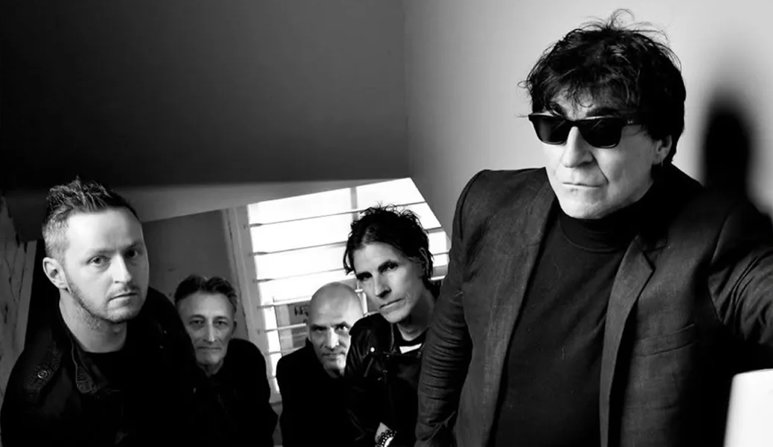
As I clicked through more videos, I noticed the lineup had changed. Dave Fielding, one of the original guitarists whose interplay with Reg Smithies created that signature sound, was gone – apparently, he and Vox (Burgess) had reached a creative impasse. But the new guitarist, Stephen Rice, wasn’t just filling space. He brought the same expansive, atmospheric quality, the same ability to create mood and texture through layers of sound. Some bands never recover from the loss of founding members. Others find new blood that honors the foundation while building something fresh on top of it.
I also learned that John Lever, the original drummer, had passed away in 2017. His replacement, Todd Demma, had that same precision, that ability to provide both foundation and atmosphere. This wasn’t a tribute band or a diminished version of The Chameleons – this was a genuine evolution, perfect for this new phase of their musical journey.
The band wasn’t just going through the motions. Those signature guitars still created that particular space that only The Chameleons could make – somewhere between urgency and atmosphere, between intimacy and vastness.
I stayed up until 2 AM that night, following video after video. That’s when I discovered they weren’t just touring old material but creating new music – actual albums released without fanfare or major distribution. I found their Mixcloud account that July night and saw they had a new album announced for September release. I didn’t hesitate – I pre-ordered it immediately, paying directly to the band. The transaction felt right somehow. No Spotify algorithms, no record label taking a cut, just sending money to artists who’d been speaking to me for decades.
Then came the waiting. I’d check my email almost daily through August, wondering if they’d release it early. There’s something beautifully anachronistic about anticipating music in 2025. We’ve become so accustomed to instant access that delayed gratification feels almost like time travel – back to when you’d circle album release dates on calendars, call record stores to see if shipments had arrived.
When September finally came and the download links appeared in my inbox, I created a ritual around it. I cleared my schedule for the evening, made sure I had good headphones charged, and dimmed the lights in my house, with Nag Champa incense permeating the room. The kind of listening experience we rarely give ourselves anymore – not background music while working or commuting, but sitting with the album as its own event.
“Where Are You?” and the Body’s Memory
The album opens with “Where Are You?”—and those first guitar riffs bypassed my critical faculties entirely. I found myself physically responding—my head moving, my shoulders, the kind of unconscious movement you can’t fake. This wasn’t nostalgia. This was recognition. My body remembered this band before my brain could analyze them.
There’s a particular sound The Chameleons have—something about the way those guitars layer and chime that creates space rather than just sound. You don’t just hear it; you live inside it. And there I was, inside it again, like no time had passed at all.
“Lady Strange” and the Permission to Feel
But it was “Lady Strange” that enveloped me completely. The track opens with acoustic guitar so close you can hear fingers on strings—almost invasively intimate, like someone’s playing in your bedroom while you’re trying not to listen. Then the electric guitars arrive, not crashing but materializing, layer after layer of shimmer and depth that feels both vast and precise.
I didn’t expect to cry. I’m not twenty-something anymore, raw and undefended. I’ve built the same fortifications everyone builds to get through the day. But sitting there, something gave way. Not performance tears, not aesthetic appreciation—the kind that happens because something true has found its way past every defense you’ve constructed.
The Chameleons have always understood something most bands miss: transcendence isn’t announced, it’s built. You begin with vulnerability so naked it almost hurts, then let it expand until it fills every available space.
“Magnolia” and the Courage to Need
“Magnolia” hit next with its surf guitar atmosphere and slow, sultry tempo. This was love song territory, but not the easy kind. Burgess singing about being alone now, wanting to repair what’s broken, needing “hope’s sweet touch.”
When he sings “My soul is dead without you, what did I do?”—I physically twitched. Not because it was bad, but because it was too much. Too naked. The kind of thing I’ve felt at 3 AM but would never say out loud. There’s something about hearing someone else articulate your weakest vulnerability that both wounds and heals.
When David Bowie Takes My Hand
And then came “David Bowie Takes My Hand”—and I wasn’t prepared for how directly it would speak to an actual moment from my life.
The song opens with guitars that sound as though they are untethered from reality, creating the exact dissociative fog that occurs when emotional pain becomes too intense. It’s the sound of watching your own life from behind glass.
“Washroom walls of whiteness surround me / My fear has found me on the floor / Somewhere near I can hear laughter / Forever after, behind the door.”
Those weren’t just lyrics. That was me, years ago, curled on a bathroom floor while life continued on the other side of the door. The specificity of it froze me—the whiteness of those walls, the sound of people laughing while your world ends. How did Burgess know? How could he possibly have articulated something so private, so particular to my experience?
The spacey, ethereal production creates the exact feeling of that moment—the way trauma makes everything seem unreal, distant, observed rather than lived. And then that voice, the one I’ve been listening to since the 80s, breaking slightly toward the end as the emotion becomes too much to contain within the craft.
There’s a line where Burgess invokes Dylan Thomas: “I wish I could fight / Against the dying of the light.” And then that desperate, repeated plea: “Pull me up / I’m falling too fast / Take my hand.” It’s not just good songwriting—it’s the sound of someone describing what it feels like to be genuinely suicidal without ever having to say the word.
When he names Bowie in the title, he’s invoking the artist who always represented transformation, escape, and otherworldliness. Not God, not a lover, but an artist reaching down to pull you back from the edge. Because sometimes that’s what saves us—not religion, not therapy, but art that meets us in our darkest moments and says, “I’ve been here too.”
Finding Three Among Seven
Not every track hit me with the same force. “Free Me” traces the dissolution of a relationship from dreamy love to the need for escape—beautiful, solid, but not something I need to replay outside the context of the whole album. “Feels Like the End of the World” – amidst the jangly, wistful guitars and strings – carries a political edge I don’t personally share, Burgess sounding sarcastic about how religion is used to shield people from historical horrors. I understand his perspective without needing to agree with it.
That’s the thing about a real album versus a collection of singles—not every song becomes personal scripture. Out of the seven tracks, three have made it into my permanent rotation: “Where Are You?” for that rush of recognition, “Lady Strange” for those tears that caught me off guard, and “Magnolia” for that surf-guitar vulnerability.
What Stays When the Music Stops
The bands that shaped us—really shaped us—they become part of how we navigate the world. Not background music, not lifestyle accessories, but actual interpretive frameworks. When betrayal happens, when fear finds you on the floor, when you need hope’s sweet touch—these aren’t abstractions. They’re lived experiences that require language.
The Chameleons provided that language in 1982. They’re still providing it now. For all the changes in music distribution—from vinyl hunted down at Sounds to direct Mixcloud downloads—the core transaction remains unchanged: artists who tell the truth about what it means to be human, and listeners who recognize themselves in that truth.
Mark Burgess’s voice hasn’t weakened with time. The guitars still create those spaces you can live inside. The questions remain just as urgent: Where are you? Can you take my hand? Is there hope’s sweet touch waiting somewhere beyond alienation?
For those of us who grew up when radio could change your life with a single song, who remember when finding music required physical pilgrimage, who understand that ownership meant something tactile—The Chameleons represent something increasingly rare. Artists who never compromised, never chased trends, never pretended connection was easy or answers were simple.
They just kept making beautiful, devastating music about what it feels like to be broken open by the world and somehow still standing.
When Burgess sings “Pull me up / I’m falling too fast” and I think about my own moments on bathroom floors, in church pews begging God to help me understand life, in dark bedrooms trying to understand betrayal. It’s not nostalgia connecting us. It’s recognition across time. Some wounds don’t heal; they just become part of your geography. And sometimes, years later, you hear someone mapping that same territory and realize: you never walked it alone.
This new Chameleons album requires headphones, solitude, and the courage to feel whatever comes up. Some music has earned that level of attention. Some artists have earned that level of trust. When they ask, “Where are you?”—the only honest answer is “Right here. Still listening.”